
Secure patient portal login for viewing reports and booking appointments — priority-route delivery, generally not subject to promotional DND preferences when registered under the applicable non-promotional category, voice OTP fallback for accessibility.
OTP for patient verification confirms control of the registered patient mobile number before granting portal access to lab reports, prescriptions, or appointment details — delivered in within seconds on dedicated, non-promotional routes. A voice OTP fallback is available for patients who prefer a spoken code over reading an SMS. Part of our healthcare communication solutions, delivered by MetaReach as an OTP service provider in India.
A patient portal typically holds lab reports, prescriptions, and appointment history — information that needs to stay restricted to the patient, not anyone who guesses or obtains their login. OTP verification adds a fast, low-friction second check that confirms the person logging in actually controls the registered phone number, before any report or record is shown on screen.
This matters most at the exact moment a patient is checking a diagnostic result or confirming a same-day appointment — a slow or failed OTP at that moment is a direct hit to trust in the hospital's digital systems.
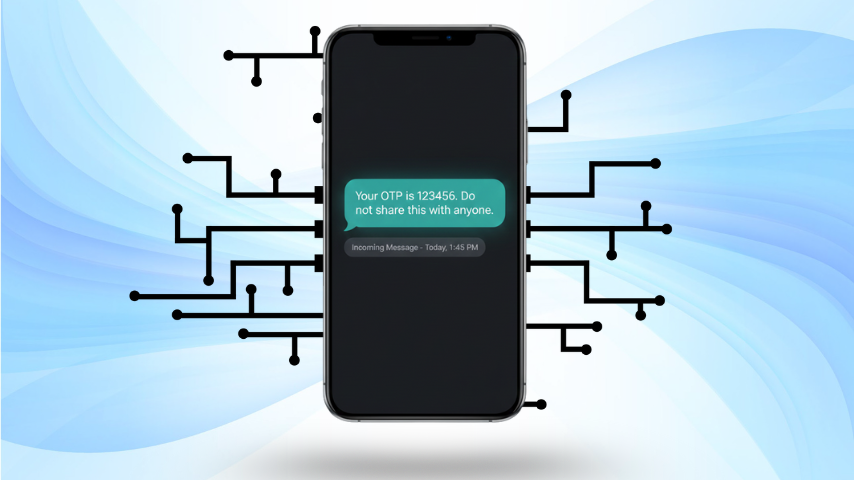
A patient checking for a lab report or trying to book a same-day appointment shouldn't be left waiting on a slow OTP. MetaReach delivers patient OTPs within seconds on dedicated priority routes that, when registered correctly, are generally not subject to promotional DND preferences — the same infrastructure used for our fintech OTP authentication service, where a delayed code has an equally direct cost.
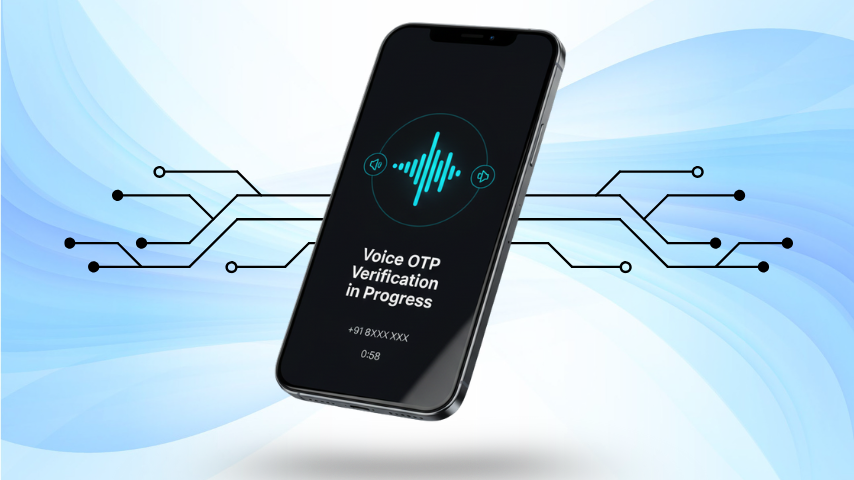
Verification is designed to add a single, quick step to login — not a barrier between the patient and their records.
For patients who may find reading an SMS code difficult — including many elderly patients — a voice OTP call reads the code aloud instead. It works as either a default option or an automatic fallback when an SMS goes unread within a set window, a small accommodation that keeps portal access usable across a hospital's full patient demographic, including patients on basic phones with no internet access.
OTP verification is one piece of a broader patient communication setup alongside appointment reminder SMS, IVR appointment booking, and missed-call booking. See how hospitals and clinics combine these channels in our healthcare case studies.
OTP verification confirms the person logging in is genuinely the patient, protecting access to lab reports, prescriptions, and appointment details from unauthorized viewing.
MetaReach targets delivery within seconds on dedicated priority routes, so patients aren't left waiting to access their reports or complete a booking.
This depends on the hospital's security policy, but OTP is commonly required at least on first login from a new device, or for accessing particularly sensitive records.
Yes, a voice OTP call can be used as an alternative or fallback for patients who may find it easier to receive a spoken code than to read an SMS.
Yes, OTP is delivered by SMS or voice call to any mobile number, so patients don't need a smartphone, app, or internet connection to verify control of their registered mobile number.
From startups to enterprises — brands that grow with MetaReach