About These Case Studies
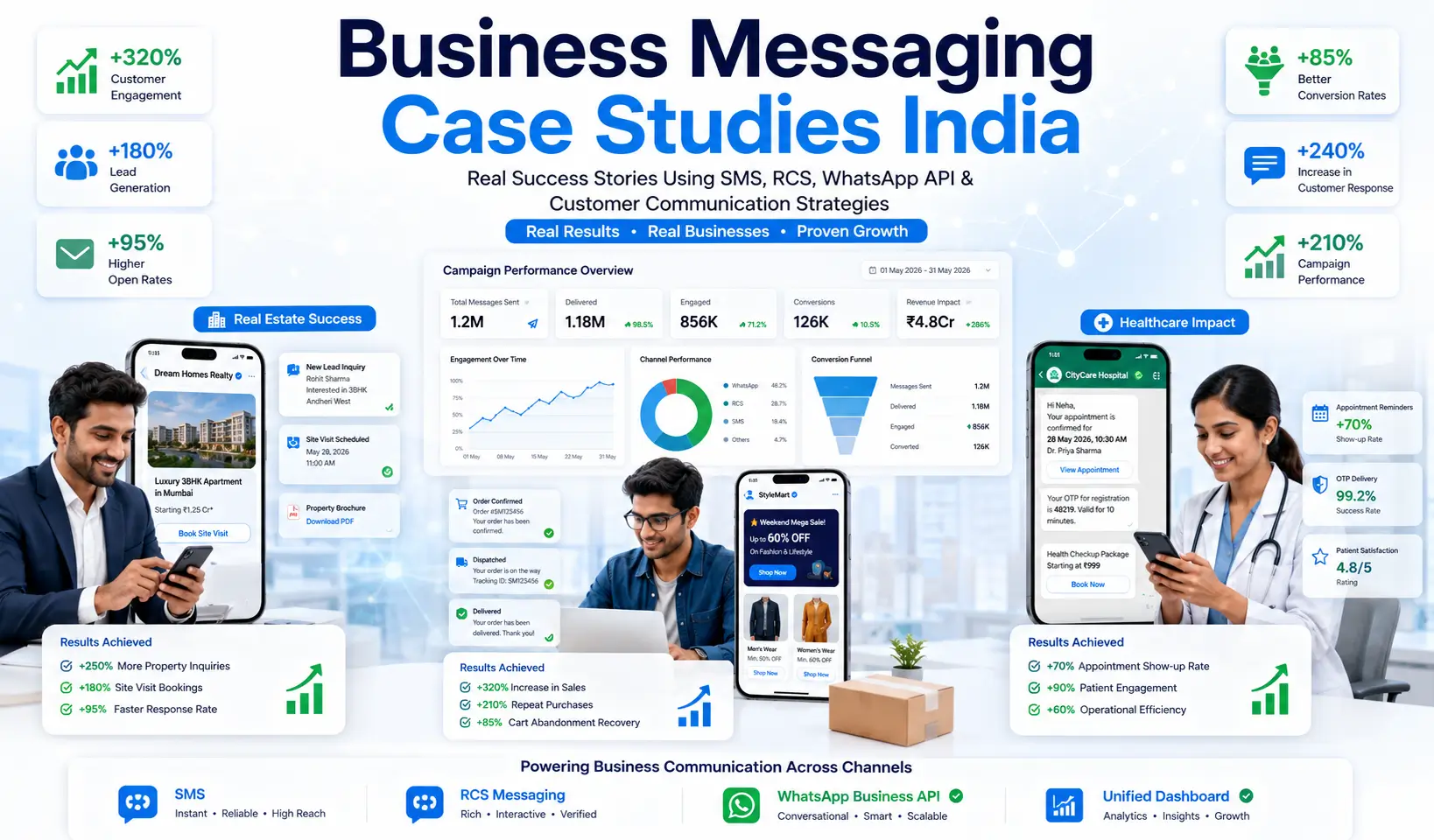
Five case studies covering the most common messaging use cases for Indian businesses in 2026 — RCS for D2C cart recovery, OTP for fintech, bulk SMS for coaching institutes, WhatsApp Business API for home services, and organic search for B2B. Each includes the challenge, approach, and results.
Data sheets and comparison tables are useful. But what actually tells you whether a messaging channel works is seeing how a business similar to yours used it — and what the numbers looked like at the end.
These five case studies come from different verticals across India: a D2C fashion brand, a fintech lending platform, a Rajasthan coaching institute, a Delhi NCR home services company, and a Pune-based industrial manufacturer. Different industries, different objectives, different channels — but each made a measurable change and tracked the result.
The goal here isn't to impress you with big numbers. It's to give you an honest picture of what each channel can do, under what conditions, and what it takes to get there.
Cart Recovery Without Discounts: An RCS Story
The Challenge: A D2C fashion brand selling premium ethnic wear online was losing roughly 70% of filled carts. Their SMS cart recovery sequence had low click-through rates. Email open rates were declining. They wanted to try RCS but weren't sure if Indian customers would engage with branded rich messages.
What They Did
They built a three-message RCS sequence for cart abandonment: the first message sent 30 minutes after cart abandonment with a product carousel (images of the exact items left in cart), a product description snippet, and a single "Complete Your Order" action button. The second message went 4 hours later — this time showing a "Similar Styles" carousel to re-ignite interest. The third, sent 24 hours after abandonment, was a clean text-style message with a direct link.
All three messages used their verified brand name and logo as the sender — no anonymous header code. They maintained SMS fallback for customers whose handsets didn't support RCS.
OTP Delivery Speed That Actually Affected Conversions
The Challenge: A mid-sized personal loan platform in Delhi NCR was seeing a significant support ticket volume related to "OTP not received." Their loan application completion rate was lower than their funnel analytics predicted. Customers were dropping off at the OTP verification step — not because they didn't want the loan, but because the OTP arrived too late.
What They Did
They migrated from a shared transactional route to a dedicated, DLT-registered transactional sender ID with a direct telecom route. They also corrected their message category from the generic "Service Implicit" to the correct "Transactional" classification — something many businesses get wrong, and which routes OTPs through a slower shared queue.
At the same time, they registered a cleaner template that matched the exact variable pattern used in their OTP messages — previously there were small formatting differences between their template and the actual sent message, which caused occasional operator-side filtering.
Coaching Institute Fills Admissions With One Bulk SMS Campaign
The Challenge: A competitive exam coaching institute in Rajasthan had been investing heavily in Facebook and Instagram ads for admissions. CPL was rising, the student quality from paid social was inconsistent, and they still had a large database of previous enquiries, past students, and referral contacts who'd never been reached systematically via SMS.
What They Did
They ran a DLT-compliant bulk SMS campaign to their full lead database — segmented into: previous students (re-enrolment), 12-month-old enquiries (revival), and referral contacts (new). Each segment received a slightly different message but all pointed to a single admission counsellor WhatsApp number rather than a generic form page.
The campaign ran over two days, timed for 10 AM and 6 PM sends. Replies went to a live counsellor rather than an automated bot. Each interested reply was followed up within 15 minutes by phone.
Cutting No-Shows and Speeding Up Enquiries With WhatsApp API
The Challenge: A home services company in Delhi NCR offering plumbing, electrical, and deep cleaning had two persistent problems: a high rate of appointment no-shows (customers simply not being home when the technician arrived) and slow response to new inbound enquiries (30–60 minutes average via email and website form). Both were eroding operational efficiency and customer satisfaction scores.
What They Did
They integrated WhatsApp Business API for two flows: (1) automated appointment reminder sequence — confirmation message immediately on booking, reminder 24 hours before, reminder 2 hours before with the technician's name, photo, and a live map link to their current location; (2) new enquiry handling — incoming WhatsApp messages from their Google Business Profile and website widget were routed to a live agent with a 5-minute SLA.
The Confirm / Reschedule button on the reminder messages made it easy for customers to reschedule proactively rather than simply not answer the door. Technicians were notified in real time when a customer confirmed.
Getting Serious Buyers to Find a B2B Manufacturer on Google
The Challenge: A Pune-based industrial component manufacturer had strong product quality and competitive pricing but near-zero online visibility. Buyers searching for their specific product categories (precision machined parts, CNC turned components, custom fasteners) couldn't find them on Google. Their sales pipeline depended entirely on trade shows, word of mouth, and cold calls — all slow and expensive.
What They Did
They invested in a content-led SEO strategy over 12 months: technical product pages optimised for buying-intent queries, industry-specific blog content answering questions procurement managers actually search for, and structured data marking their products as Schema.org Product entities with detailed specifications.
WhatsApp Business API was integrated as a quick-enquiry channel on product pages — a "Request Sample" button that opened a pre-filled WhatsApp message. Enquiries were handled by a senior technical sales manager within 2 working hours.
What These Cases Have in Common
Five very different businesses, five different channels, five different problems — but the patterns are consistent:
- Channel match matters more than channel budget. The coaching institute didn't need RCS. The D2C brand didn't need bulk SMS. Matching the channel to the use case and audience is the first decision, not an afterthought.
- Speed of follow-up multiplies campaign value. In three of the five cases, fast human response (not a bot) was a critical factor in conversion. Technology can deliver the message; people close the deal.
- Compliance is load-bearing, not optional. Every messaging case here depended on DLT-compliant templates and categories. The fintech OTP case shows directly what a compliance gap costs — in this case, application completions.
- The right metric is outcome, not delivery. All five businesses started by measuring what they actually cared about — admissions, no-shows, loan completions — not just delivery rates. If you're only watching delivery percentages, you're watching the wrong number.
If you're trying to figure out which channel or combination makes sense for your business, the RCS vs SMS comparison guide covers the data in detail. And if you're not yet DLT-compliant, our TRAI DLT compliance guide walks through the registration process step by step.
Want Results Like These for Your Business?
MetaReach provides Bulk SMS, OTP, RCS Business Messaging, and WhatsApp Business API — all with full DLT compliance, real-time analytics, and expert setup support across India.
Book a Free Demo See All Services →