
A dedicated missed-call number for lead capture, marketing campaigns, and OTP/2FA verification — with real-time SMS/email notifications, CRM integration, and API access for developers.
Get Your Free Missed Call NumberA missed call number is one of the cheapest, most frictionless ways to capture a lead or confirm a customer's interest in India. Your customer dials a dedicated number, the call disconnects automatically before it's answered — free for them, zero setup cost for you — and your business is instantly alerted with their number so your team (or an automated workflow) can follow up immediately.
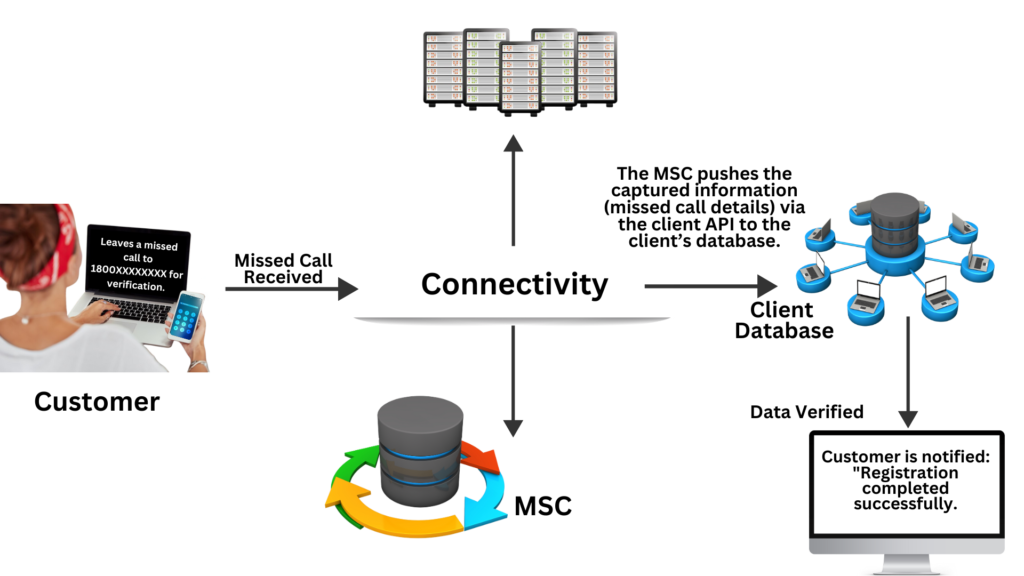
A missed call alert service gives your business a dedicated number that customers can call and hang up on — the call never connects, so it costs the caller nothing. The moment that missed call comes in, our system captures the caller's number and instantly alerts your business through SMS, email, or your dashboard, so you can call them back or trigger an automated follow-up right away. It's the mechanism behind "give a missed call to..." campaigns you see on hoardings, print ads, and TV spots across India.
Print ads, hoardings, and TV spots that say "give a missed call to know more" — capturing interest without asking the customer to fill a form or spend a rupee. Real estate developers use this for hoarding and print-ad lead capture — see our missed call service for real estate. Auto dealers use this for test drive and service callback requests — see our missed call service for automobile dealers. Astrology platforms use this for the newspaper-ad, hoarding, and word-of-mouth leads that are common in the industry — see our missed call service for astrology leads. Marriage bureaus use this for the newspaper-classified and word-of-mouth leads that have always driven the business — see our missed call service for marriage bureau leads. Gaming studios and esports platforms use this for tournament promotions and community sign-ups run through social media, streams, and offline events — see our Gaming Campaign Lead Capture use case.
"Give a missed call to subscribe" or register interest in an offer, event, or product launch — one call, no data entry required.
Collect RSVPs for events, webinars, or launches by giving attendees a single number to call — no app, no link, no login.
Run simple polling or voting-style engagement campaigns — each missed call to a specific number counts as a vote or response.
Let customers request a callback from support without waiting on hold — a missed call queues them for a callback instead. Clinics use this for appointment booking too — see our healthcare case studies.
These two are often confused, but they solve different problems. A toll-free number requires the customer to stay on the line — they're actually connected to your team or an IVR, and you pay per minute of that call. A missed call number never connects the call at all — the customer just dials and hangs up, so it's completely free for them and there's no call-minute cost on your side either. Toll-free is better when you need a live conversation; missed call is better when you just need to capture interest or a lead instantly, with the lowest possible friction for the customer.
The caller's number is texted to your team the moment a missed call is received.
Get the caller's number and call time delivered straight to your inbox.
Every missed call logged in real time on your MetaReach dashboard, with call history and source tracking.
Push missed call data directly into your CRM or internal systems via our REST API — no manual entry.
Right after a missed call is received, we can trigger an automated SMS reply to the caller so they know their interest was registered. A few examples of the kind of message we set up for clients:
"Thanks for your interest! Our team will call you back within 30 minutes."
"Thank you for registering. Here's the link you asked for: [link]. Reply STOP to opt out."
"Your RSVP is confirmed! We'll send event details shortly. See you there."
We don't publish flat package prices because the right setup depends on a few factors: the number of dedicated numbers you need, your expected monthly call volume, and the complexity of CRM integration (a simple SMS alert vs. a full webhook/API push into an existing system). Call or WhatsApp us at +91-7669999219 or contact us for a scoped quote — no obligation.
Missed call numbers aren't just for lead capture — the same free, frictionless mechanic also works well as a lightweight identity verification and two-factor authentication method. Here's how that use case works.
Missed-call verification is a straightforward method where a user initiates a call to a designated number and hangs up before the call is answered. This action serves as a signal to the verification system, confirming the user's phone number without the need for lengthy processes or additional costs.
he customer dials a pre-defined number associated with your service.
The system detects the missed call and logs the caller's number.
The system verifies the number against your database and sends a confirmation response to the user, often in the form of a text message or email.
Missed-call verification can significantly reduce costs associated with sending SMS or voice OTPs, especially in regions with high messaging fees.
By using both methods, you create a multi-layered verification process that is more difficult for fraudsters to bypass.
Combining these methods can lead to more reliable customer data, as users are more likely to provide accurate information when multiple verification steps are involved.
Missed-call verification is quick and easy for users, enhancing their overall experience while ensuring their identity is verified.
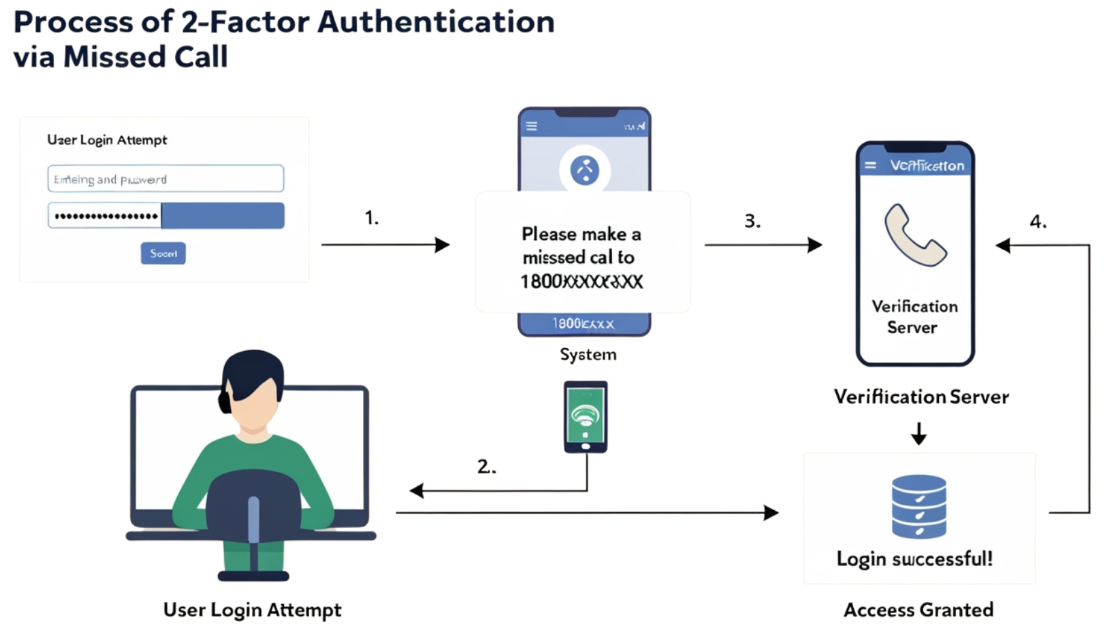
The user enters their username and password on the website or app.
After entering the correct login details, the system asks the user to confirm their identity by making a missed call to a specific number.
The user makes a missed call to the provided number. The call doesn’t connect, so there are no charges.
he system records the missed call attempt and checks the user’s phone number against the registered number.
Since the call isn’t answered, there are no charges for the user.
It’s a simple and quick way for users to confirm their identity
It adds an extra layer of protection, reducing the risk of unauthorized access.
Need full Voice OTP delivery instead of missed-call-only verification? See our Voice OTP service →
Pair missed call alerts with SMS follow-up for the templates above — see our bulk SMS service →. Need outbound calling too? See our OBD voice call services in Noida → or OBD voice call campaigns across India →.
We know you have questions — here are honest answers to the most common things people ask us about missed call alerts and missed call verification.
It's simpler than it sounds. A user dials a number you provide, and the call disconnects automatically before anyone picks up. That's it — their phone number is captured and verified instantly. No internet needed, no OTP to type, no form to fill. It's one of the most frictionless ways to confirm a real customer is on the other end.
Not a single rupee. Since the call disconnects before it's answered, the user's telecom operator doesn't bill them anything. This is one of the biggest reasons why missed call campaigns work so well — there's zero hesitation from the user's side. Whether they're on prepaid or postpaid, there's no cost involved.
Almost instantly. The moment someone gives a missed call, our system logs the number and pushes it to your dashboard or CRM in real time — usually within a few seconds. You can also set up instant SMS or email alerts so your sales team gets notified the moment a new lead comes in.
Yes, absolutely. We provide a clean, developer-friendly REST API that connects missed call data directly to your website, mobile app, or any CRM platform you already use. Whether you're on a custom-built system or a popular CRM, our team will help you get it integrated without any hassle.
OTP requires the user to receive an SMS, read a code, and type it in — which can fail if there's poor network, a delivery delay, or if the user is on a DND list. Missed call verification skips all of that. The user just dials and hangs up, and it works even without internet or SMS delivery. It's faster, cheaper for businesses, and easier for users — especially in Tier 2 and Tier 3 markets.
Missed call services work as a highly effective lead generation tool in India when implemented with a clear strategy. The key practices include: setting up a dedicated virtual number that customers can give a missed call to signal interest, triggering an automated SMS or WhatsApp response the moment a missed call is received, and ensuring that response contains a clear call to action (pricing page, booking link, or callback option). Integrating your missed call number with a CRM ensures leads are captured and assigned automatically without manual entry. Automating follow-up sequences — a callback within 5 minutes, followed by a WhatsApp message and email if unreached — dramatically improves conversion rates. Meta Reach Marketing provides end-to-end missed call setup with CRM integration, automated response workflows, and analytics dashboards so you can monitor lead volumes and response rates in real time.
A toll-free number connects the call — the customer actually talks to your team or an IVR, and you pay per minute. A missed call number never connects at all — the caller dials and hangs up, so it's completely free for them and there's no call-minute cost for you. Toll-free is better for a live conversation; missed call is better for capturing a lead or interest signal at the lowest possible friction.
Yes. The same underlying mechanic — a free, unanswered call to a dedicated number — works for both. Many businesses use one number for marketing/lead-capture campaigns and a separate number for missed-call-based verification or 2FA, so the two use cases stay cleanly separated in reporting.
From startups to enterprises — brands that grow with MetaReach