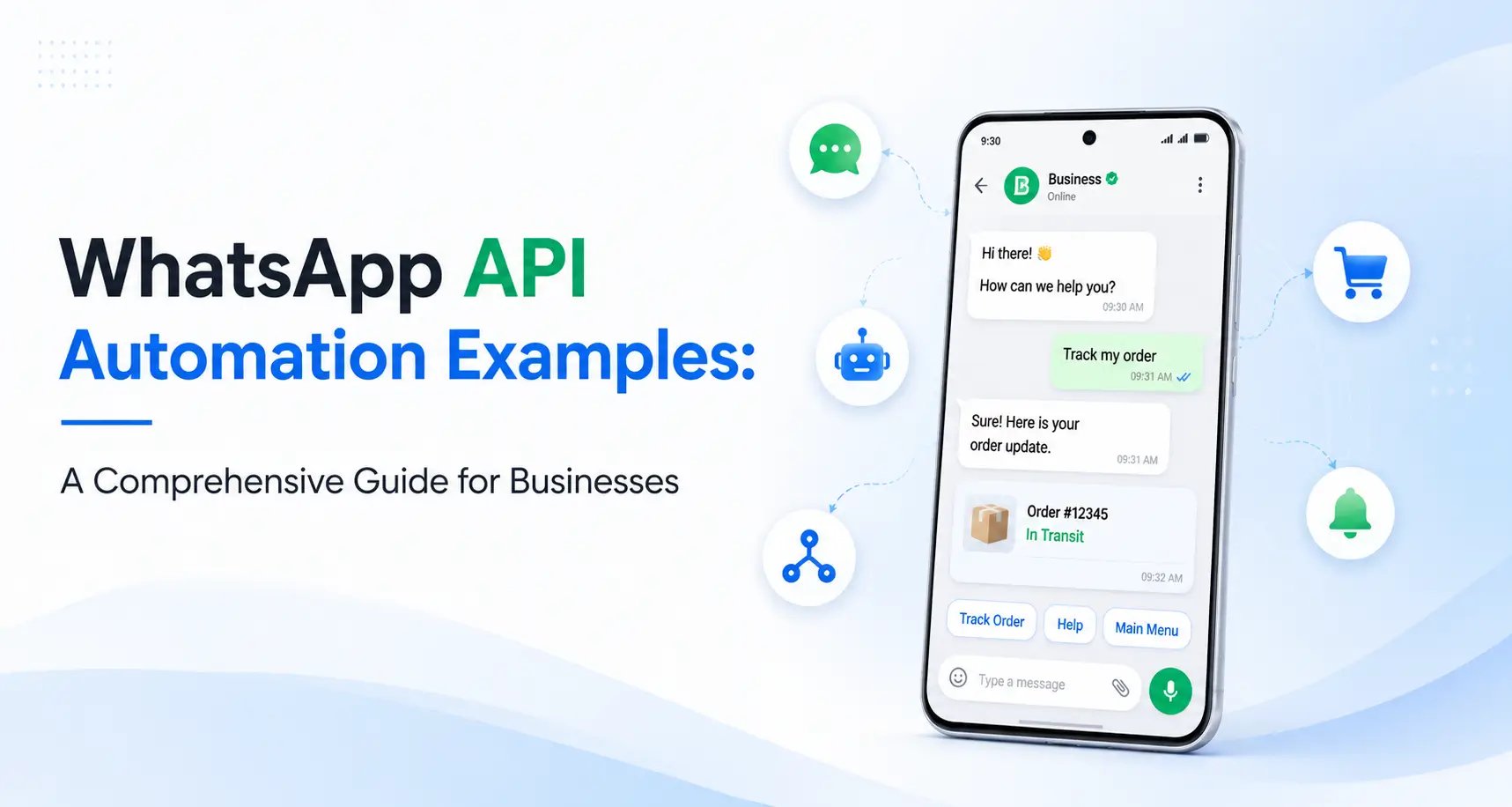
In the mid 2010, when WhatsApp entered the Indian market, nobody thought that it would become the reason for businesses to double their profit, just by making the communication between two parties so simple and convenient.
Evaluation of WhatsApp in 5 major parts
- The "Just for Friends" Phase - In the beginning, WhatsApp had a single goal: replace costly SMS texting. It was a pure peer-to-peer playground meant for casual, daily chatting between individuals.
- The Jio Data Boom & Accidental Business (2016–2017) - In late 2016, Reliance Jio launched cheap 4G internet across India, picking up 16 million subscribers in its first month and crossing 130 million within a year. Internet access exploded, and local shop owners, Kirana stores, and boutique brands realized their customers were online 24/7. India has over 12 million kirana stores, and within a few years, more than a million had already picked up some digital tool for payments, delivery, or orders — most starting with the one app already on their phone. Indian merchants began using their personal WhatsApp accounts to take orders, share product photos, and handle customer service manually.
- The "Local Shop" Upgrade - As the app grew, local shop owners and solopreneurs started using their personal accounts to take orders. Seeing this, WhatsApp launched a separate, free Business App. It gave small shops basic tools like a digital product catalog, automated greeting messages, and quick replies to handle local customers.
- The "Big Enterprise" Shift - While the basic business app worked for local shops, huge companies like banks and airlines needed to talk to millions of customers at the same time. To solve this, WhatsApp built the Business API. This system allowed corporate computers to automatically send high-volume texts like flight boarding passes, delivery updates, and secure bank alerts.
- The Modern Cloud Era - Early versions of the API were complex and required expensive third-party servers to run. Therefore Meta moved the entire system to their own secure cloud servers. And today, any business can instantly plug WhatsApp into their existing CRM software, build smart AI chatbots, and process direct payments right inside the chat window.
What WhatsApp API Automation Actually Is
Well if not considering the backend part which involves coding and all, the WhatsApp API automation is your AI agent who is looking after your customer. It is protecting you and your time from typing or copying paste the same 5 things on repeat. The WhatsApp API automation is based on increasing the efficiency of the business and by moving past the basic consumer app and plugging directly into the WhatsApp Business API, it quietly handles the heavy lifting: qualifying raw leads, routing complex tickets to the right agents, triggering instant order updates from your e-commerce store, and syncing every conversation straight to your CRM. You don't need to be glued to a screen to keep your business moving forward.
Curious what this looks like for your own business?
See MetaReach's WhatsApp Business API in action →Types of WhatsApp API Automation
| Automation Type | What It Does | Example Use |
|---|---|---|
|
Auto-replies
|
Instant responses when a customer messages you | "Thanks for contacting us. How can we help?" "We'll reply within 2 hours." |
|
AI Chatbots
|
Smart bots that answer questions, qualify leads, and route conversations | Answer FAQs (hours, pricing, policies) Qualify leads (budget, location, need) Route to sales/support/HR |
|
Campaigns
|
Targeted messages sent to segmented contact lists | Festival offers to past buyers New course announcement to students in a specific city Renewal reminders to insurance customers |
|
Template Messages (Event-Based)
|
Pre-approved messages triggered by business events | Purchase confirmation Abandoned cart reminders Shipment dispatched / delivered Appointment confirmed / updated Application status change (approved/rejected) |
|
Keyword Triggers
|
Detect what a customer wants based on their message and act on it | "book" → show appointment slots "track" → send order tracking link "price" → share rate card or product pricing "help" → open support flow or assign to an agent |
|
Scheduled Messages
|
Messages sent at optimal times automatically, without manual scheduling | Reminder before the appointment tomorrow Fee due reminder on the 1st of the month Reorder reminder 30 days after last purchase Event reminder 24 hours before start |
Not sure which automation fits your business first?
Book a free demo and MetaReach's team will map it out for you →Examples of WhatsApp API Automation
1Instant Greeting & Auto-Reply
The moment someone messages you, even at midnight, they get a reply. Not a real person yet, just enough to say "we've got you" — hours, a quick hello, maybe a booking link. This one thing alone improves response times by around 225% compared to manual-only handling, and 55% of customers already expect an automated reply as the default, not a shortcut. Need copy-paste-able greeting text? See our WhatsApp welcome & greeting message examples →
2FAQ Automation
Every business gets asked the same five questions on repeat. Hours, location, pricing, return policy. A properly set up FAQ bot can resolve 60–80% of all incoming questions without a human ever stepping in, and businesses running this report report response times dropping by roughly 35%.
3Lead Qualification
Before you waste time pitching a random visitor, the automation quietly asks the right questions first. Looking for hair or skin? What's the budget? Which city? Businesses using WhatsApp chatbots for this generate up to 5x more leads than they would through a regular web form, and qualified leads coming through this flow have been linked to sales conversion increases of up to 27%.
4Routing Conversations to the Right Team
Not every message belongs to the same person. "I want to buy," goes to sales, "my order's late," goes to support, "interview tomorrow?" goes to HR. No more messages sitting in the wrong inbox. Faster, more accurate routing directly improves resolution speed and customer satisfaction — 70% of companies using WhatsApp automation report improved CSAT as a direct result.
5Campaign Messages (Promotions)
Instead of blasting the same offer to your entire list, this sends the right message to the right group. Foe example - A festival discount sent only to past buyers, or a new course announcement sent only to students in a specific city. With WhatsApp open rates sitting near 98% (compared to roughly 20% for email), segmented campaigns like this have been tied to sales increases of around 27%, and in some documented cases, growth as high as 127%.
6Order Confirmation & Asking for Excat Delivery Location
Especially for COD orders, this locks in the details before the courier even leaves. "Order #123, ₹999, confirm your address?" or "We need your EXACT delivery location to help us get your order of XYZ to you right on time. If you consent to share your location, please TAP the button below" with an option of "YES" and "NO"
This single automation is one of the most effective RTO (return-to-origin) reduction tools in e-commerce. Companies using WhatsApp Business API for order confirmation have reported up to a 25% drop in cart/order abandonment-related losses.
7Abandoned Cart Recovery
Somebody added items to their cart and just left. Roughly 70% of online carts get abandoned this way, and a timely WhatsApp reminder like "You left 2 items in your cart. Complete your order now and get 5% off" — with product images and a direct payment link (sent within 30–60 minutes) recovers 15–30% and performs 3–4x better than waiting several hours.
8Shipment & Delivery Updates
Nobody wants to keep messaging "where's my order?" This handles it before they even have to ask. Shipped, tracking link, expected date, delivered, all automatic. For example, "Your order has shipped! Track here: [link]. Expected delivery: 15 July." → "Delivered successfully!" and since these fall under lower-cost "utility" messages, it's cheap to run at scale.
9Delivery Confirmation & Review Requests
Right after delivery, while the experience is still fresh, it asks for a quick rating. Timing is everything here — asking immediately after delivery, instead of days later, is what actually drives review volume up instead of getting ignored.
Want automations like this running on your number?
Chat with MetaReach on WhatsApp and get set up in days, not weeks →10Appointment Booking & Reminders
Customers book their own slot, no calling, no waiting. Clinics and service businesses using automated reminders 24 hours and 1 hour before an appointment have reported no-show rates dropping by as much as 40%.
11Post-Purchase Follow-Ups
The relationship doesn't end at checkout. Personalized product suggestions sent this way see click-through rates around 30% higher than the same recommendation sent by email, and WhatsApp-first brands report repeat purchase rates as high as 68%.
12Support Ticket & Status Updates
Nobody likes wondering if their complaint disappeared into the void. 77% of customers say automation like this genuinely helps resolve simple issues faster, and 71% say it gets them quicker replies overall.
13Reorder & Consumable Reminders
If what you sell runs out, this remembers before the customer does. Thirty days after their last order: "Running low? Reorder now with 10% off." It's basically a subscription business without actually building one, and it's one of the easier automations to set on autopilot and forget.
14Event & Webinar Reminders
People register with good intentions and then forget. A reminder like "Your webinar starts tomorrow at 6 PM. Join here: [link]" 24 hours before the event protects your turnout. No-shows quietly kill event ROI. A timely WhatsApp nudge (versus an easily-missed email) is one of the simplest ways to protect turnout — some brands report campaigns like this hitting well over 200% of their original reach target when paired with good segmentation.
15Job Application & Interview Automation
Manages the entire candidate journey from "application received" to "interview scheduled" to the final decision, and every candidate stays in the loop automatically. This matters most at volume — high-hiring companies save enormous manual coordination time by not typing the same update to hundreds of applicants one by one.
16Payment & Billing Reminders
A gentle nudge a few days before the due date, with the payment link right there. Reduces missed payments and the awkward manual follow-up calls that come with them — especially useful for schools, gyms, subscription services, and lenders. For example "Your fee of ₹X is due on the 1st. Pay now: [link]" This is one of the simplest ways to reduce missed payments, since the reminder lands on the channel with the highest open rate businesses have access to (90–98%, versus ~20% for email).
17Feedback & Rating Collection
Simple rating request, and if the score is low, it's routed straight to a real person instead of getting buried. 67% of customers already trust chatbot-driven interactions like this to handle things accurately, which is exactly why the escalation step matters — it's protecting that trust.
For Example: "Rate us 1–5" → Low rating triggers "We're sorry — tell us what went wrong" → routed to a support agent.
18Product Recommendations & Upsell & Quick Tips
Bought a phone? Here's a case and charger. On the basic plan for months? Maybe it's time for premium. Or purchases a sunscreen and shampoo here how to use "Quick sunscreen tip: Apply 15 minutes before sun exposure and reapply every 2–3 hours."; "Quick shampoo tip: Wet your hair fully & apply a coin-sized amount of shampoo to clean your hair properly." This kind of targeted upsell is part of why WhatsApp-based recommendations convert at noticeably higher rates than the same message sent through traditional channels.
19Internal & HR Announcements
Policy update, training invite, team news, sent where your employees will actually read it. Internal comms often get buried in email. WhatsApp's near-universal open rates mean announcements actually get seen and acted on. This alone solves the common problem of internal emails getting buried or ignored, especially for frontline or non-desk teams. For example: "New leave policy effective next month." / "Training session on 10 July at 4 PM — reply to confirm your slot."
20Status & Approval Notifications
Loan approved, document verified, application accepted. These are the messages people are anxiously waiting for. Automating them removes the "should I call and check?" instinct and builds trust through transparency, which is exactly the kind of proactive communication 85% of customers say they want from a brand.
The First Automations Worth Building
Three automations address the acute pain rather than the long-term ambition, and each is worth building before anything more complex is attempted.
The first is the after-hours auto-reply. Instead of leaving a message unanswered until morning, the business sends an immediate acknowledgment: "Thanks for reaching out. Our team is offline right now but will respond by 10 AM tomorrow. If this is urgent, reply URGENT and we'll flag it first thing." The value isn't in what it says — that part is modest. It's in what it prevents: the customer quietly deciding that silence means indifference.
The second is the FAQ, or keyword-triggered response. A business answering the same handful of questions every day — hours, pricing, return policy, delivery timelines — can let those questions answer themselves. Someone writes "pricing" or "hours," and the reply comes back instantly, accurately, without anyone typing it. The staff member who would've handled that message is now free for the one that actually needs judgment.
The third is basic routing, so an incoming message doesn't just sit in a shared inbox until someone happens to notice it. A message with "refund" goes to one queue. A message with "order" goes to another. It's a small form of intelligence, but it's exactly the form most urgently needed by a business whose inbox has outgrown its staff.
All three share one thing worth saying plainly: none of them make the customer wait for a human to be available. That's the whole problem WhatsApp automation is meant to solve, at its simplest — nothing more complicated than that.
These three automations alone can be live on your WhatsApp number this week.
Get your free MetaReach demo →The Complete System, and Where It Is Heading
What remains is to consider what these individual automations amount to once assembled, rather than examined one at a time — and what a business ought reasonably expect as this technology keeps developing.
A mature WhatsApp automation practice isn't a pile of separate tactics running independently. It's one connected system: inbound messages get captured and, where appropriate, answered instantly. Messages arriving after hours get acknowledged instead of left silent. Leads that have gone quiet get pulled back into a structured sequence. Transactional updates fire automatically at each stage of an order or appointment. Customers who've already bought get retained through relevant, well-timed follow-up. A business running this system experiences WhatsApp not as a daily source of anxiety, but as something that keeps working whether or not anyone's watching it. A business without this system experiences the exact scene this guide opened with — a message sent at 11:47 at night, and no one there to answer it.
Where this is heading isn't hard to see. Today's automations mostly deflect repeat questions and trigger predetermined sequences. The next generation of AI-driven agents can hold an entire conversation — understanding an open-ended question, pulling the relevant information, and answering in a way that's hard to tell apart from a knowledgeable human. Conversational commerce, where a customer browses a catalog, asks questions, and completes a purchase inside a single WhatsApp thread, is already technically possible, and within a few years it'll be an ordinary expectation rather than a novelty. A business that wants to stay competitive should start with the fundamentals in this guide — but shouldn't mistake them for the destination. They're closer to the opening move in something still being written.
Frequently Asked Questions — WhatsApp API Automation
Official WhatsApp Business API in India with MetaReach Marketing
Built on Meta Cloud API · Green Tick application support · Talk to our team or get a free demo to start yours
Disclaimer: Statistics cited (response time improvements, FAQ resolution rates, lead generation, cart recovery, no-show reduction, open rates, and customer trust figures) are drawn from publicly available industry data and documented case studies on WhatsApp Business API automation as of 2026. Actual results vary by industry, implementation quality, and audience. WhatsApp, Meta, and Reliance Jio are referenced for factual and historical context only and are not affiliated with or endorsing this guide.